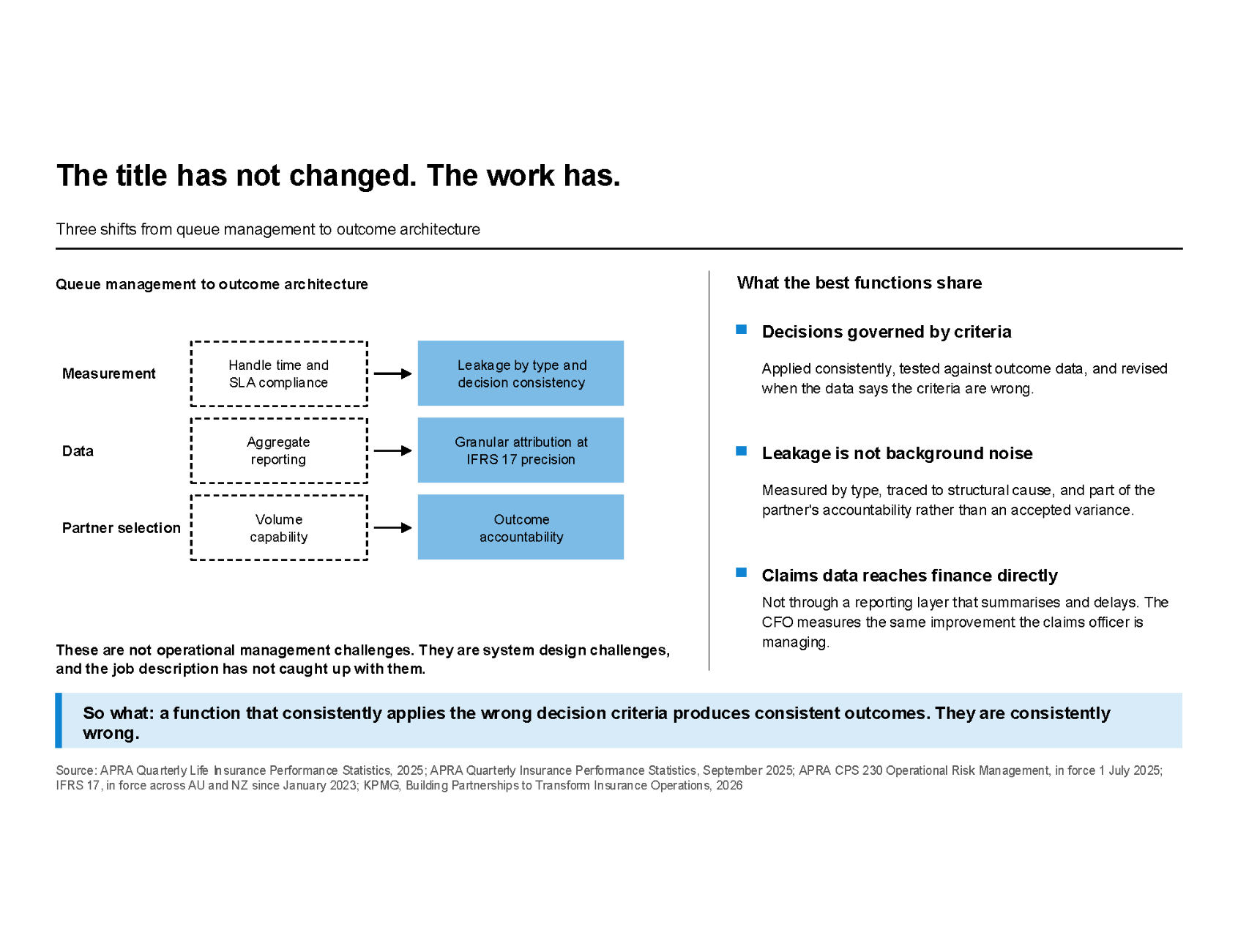


The most expensive claims decision is not the generous one. It is the inconsistent one. Generosity has a cost. Inconsistency has two.
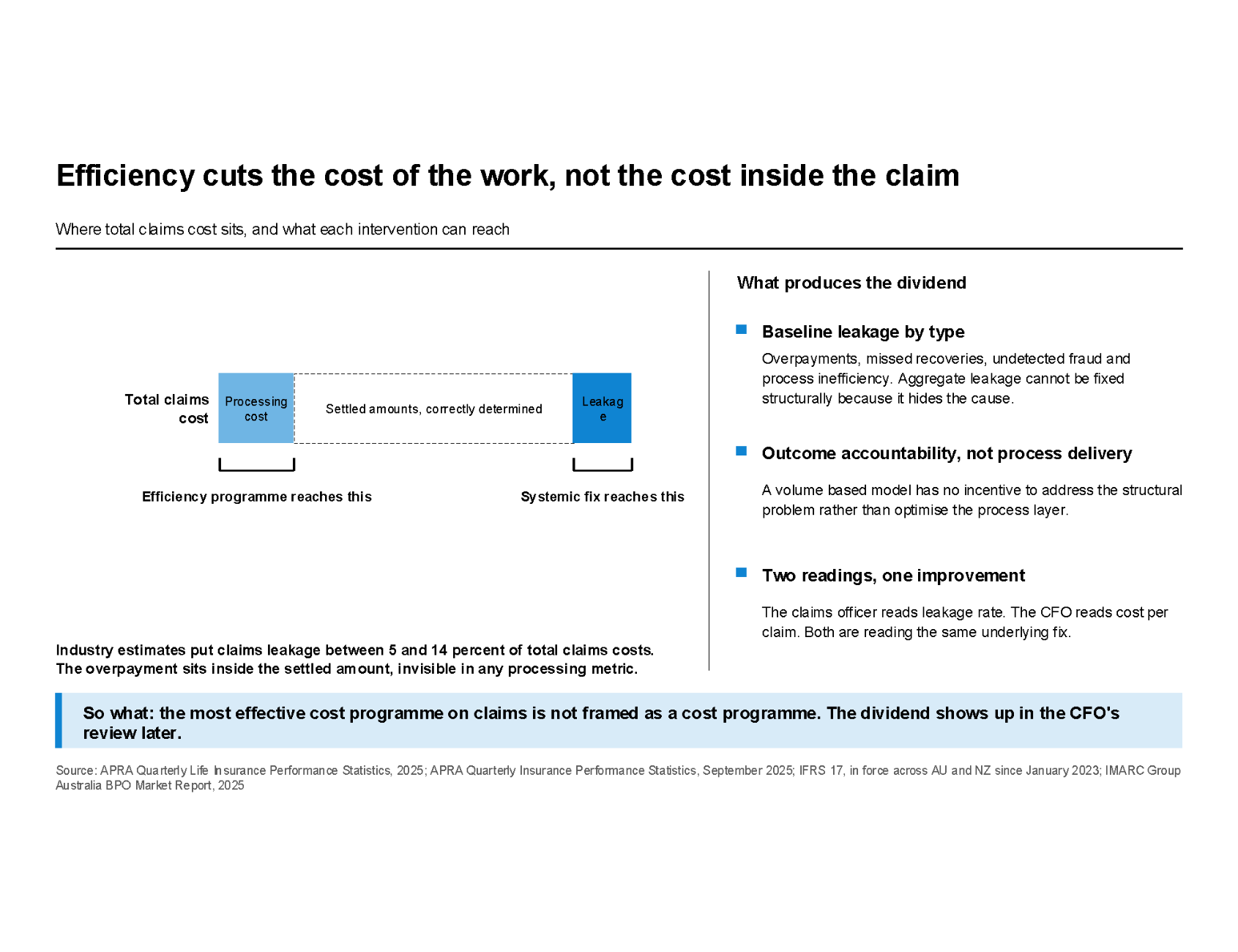
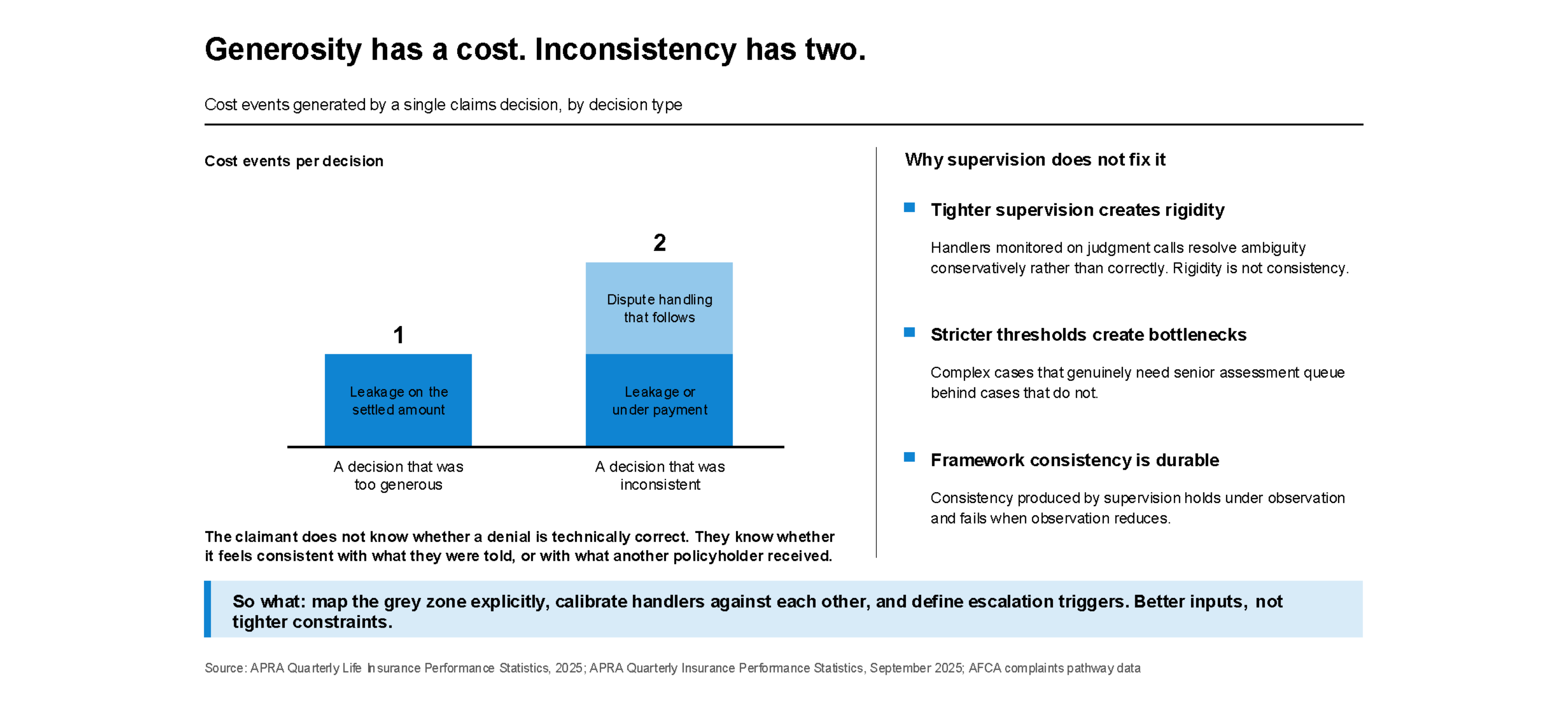
Decision inconsistency is not a visible cost. It does not appear on a single line in the expense report. It is distributed across two separate cost events: the inconsistent settlement itself - leakage where the decision was too generous, or an under-payment that sets up a dispute where it was too conservative - and the dispute that inconsistency generates when a claimant receives a different outcome from the one they expected, read about, or were told about by another policyholder. APRA data shows insurance service expenses grew 7% year-on-year at industry level through September 2025. Some portion of that cost is the second invoice from inconsistency - the dispute handling cost that follows the inconsistent decision.
The answer to how many decisions would reach a different outcome with a different handler is a measure of your decision architecture, not your people.
Inconsistency emerges from two structural sources. The first is genuine policy ambiguity: cases where policy language does not clearly resolve the fact pattern, and reasonable handlers read the discretion differently. The second is decision framework gaps: cases where policy intent is clear enough, but the guidance available to the handler is not, so different handlers apply different working interpretations. The first source is manageable. The second is an engineering problem.
Both sources generate disputes. A claimant who receives a denial does not know whether the decision is technically correct. They know whether it feels consistent with what they were told or what other policyholders received. Where decisions are inconsistent, complaints reach AFCA in Australia and the equivalent complaints pathway in New Zealand at rates that reflect the underlying variance.
The common response to high dispute rates from decision inconsistency is increased supervision: more sign-off requirements, stricter escalation thresholds, closer QA monitoring.
Neither addresses the underlying cause.
Tighter supervision creates rigidity. Handlers who are closely monitored on judgment calls lose the discretion that complex cases require. Ambiguous cases are resolved conservatively rather than correctly, because the handler's incentive is to avoid scrutiny rather than to find the right answer. Rigidity is not the same as consistency.
Stricter escalation thresholds generate bottlenecks. More cases queue for escalation. Complex cases that genuinely need senior assessment wait behind cases that do not. Resolution times increase and the pathway is used for the wrong reasons.
Consistency produced by a well-designed framework is durable. Consistency produced by supervision or script-tightening is fragile - it holds under observation and fails when observation reduces.
Decision engineering targets three points in the decision process.
First, decision boundary mapping: for each claims category on the book, identifying the fact patterns where policy language is genuinely ambiguous and documenting the decision intent. This is not a policy rewrite. It is a mapping exercise that produces explicit guidance for the grey zone without disturbing clear cases on either side.
Second, handler calibration: regular review of decision outcomes across handlers on similar case types, with structured discussion of where variance is occurring and why. This is the same tool clinicians and assessors in other complex judgment domains use to maintain consistency without removing individual expertise. It is a calibration process, not a performance management process.
Third, escalation framework design: defining the trigger conditions for escalation explicitly, so the pathway is used for the cases where it adds value - complex cases that warrant a senior decision - and not used for cases where it does not.
The output is a claims operation that produces consistent decisions because the process gives handlers better inputs - not because it constrains their judgment.
ISSI's partnership model is structured around co-owning claims and fraud outcomes - not staffing a queue. With experience on claims-intensive platforms including PetSure's GapOnly real-time claims environment, ISSI works on an outcome-based commercial model rather than a staff-augmentation arrangement. If decision inconsistency as a structural cost - not a performance management question - is the conversation worth having, it is worth thirty minutes.
Sources: APRA Quarterly Life Insurance Performance Statistics (2025); APRA Quarterly Insurance Performance Statistics (September 2025); IMARC Group Australia BPO Market Report (2025)