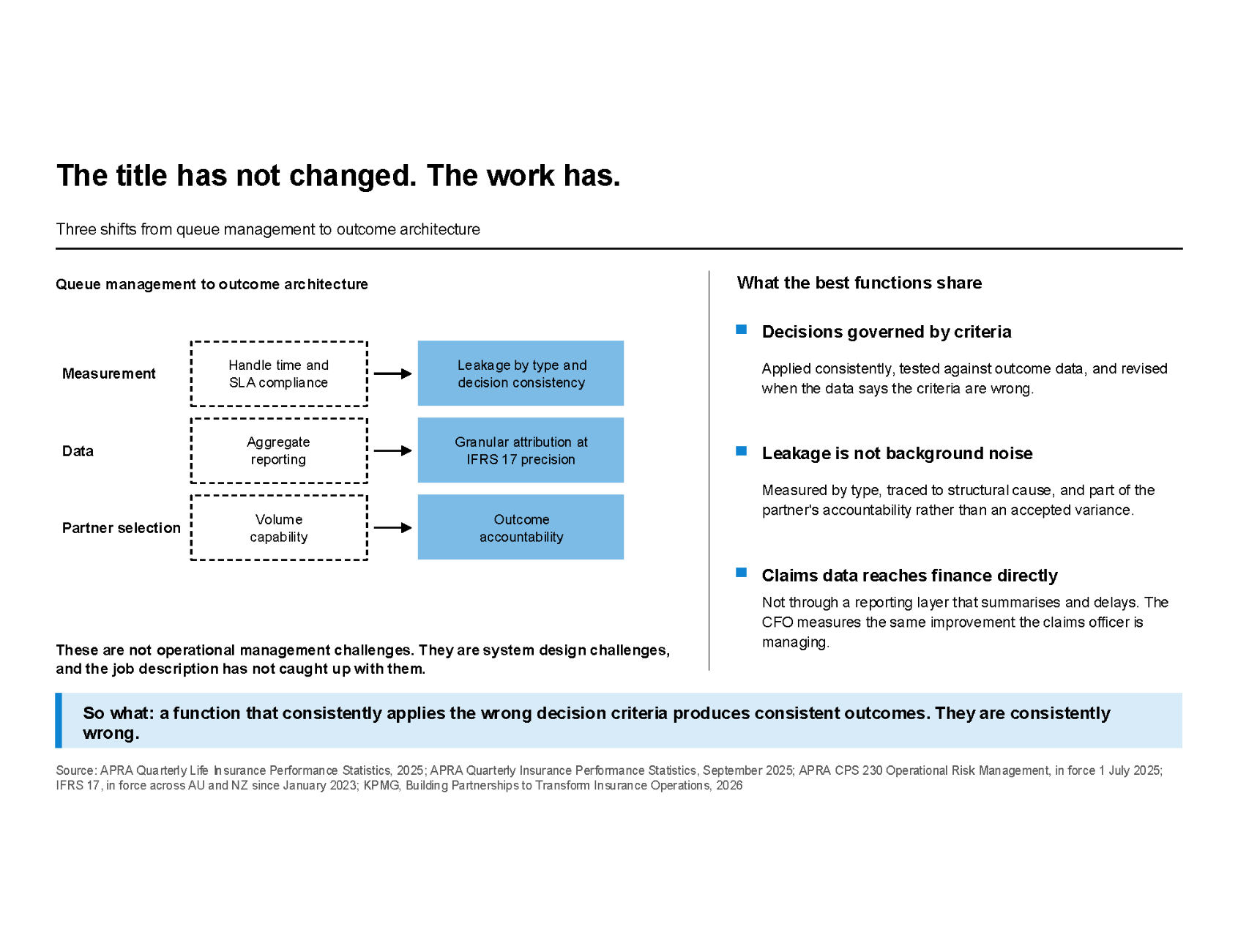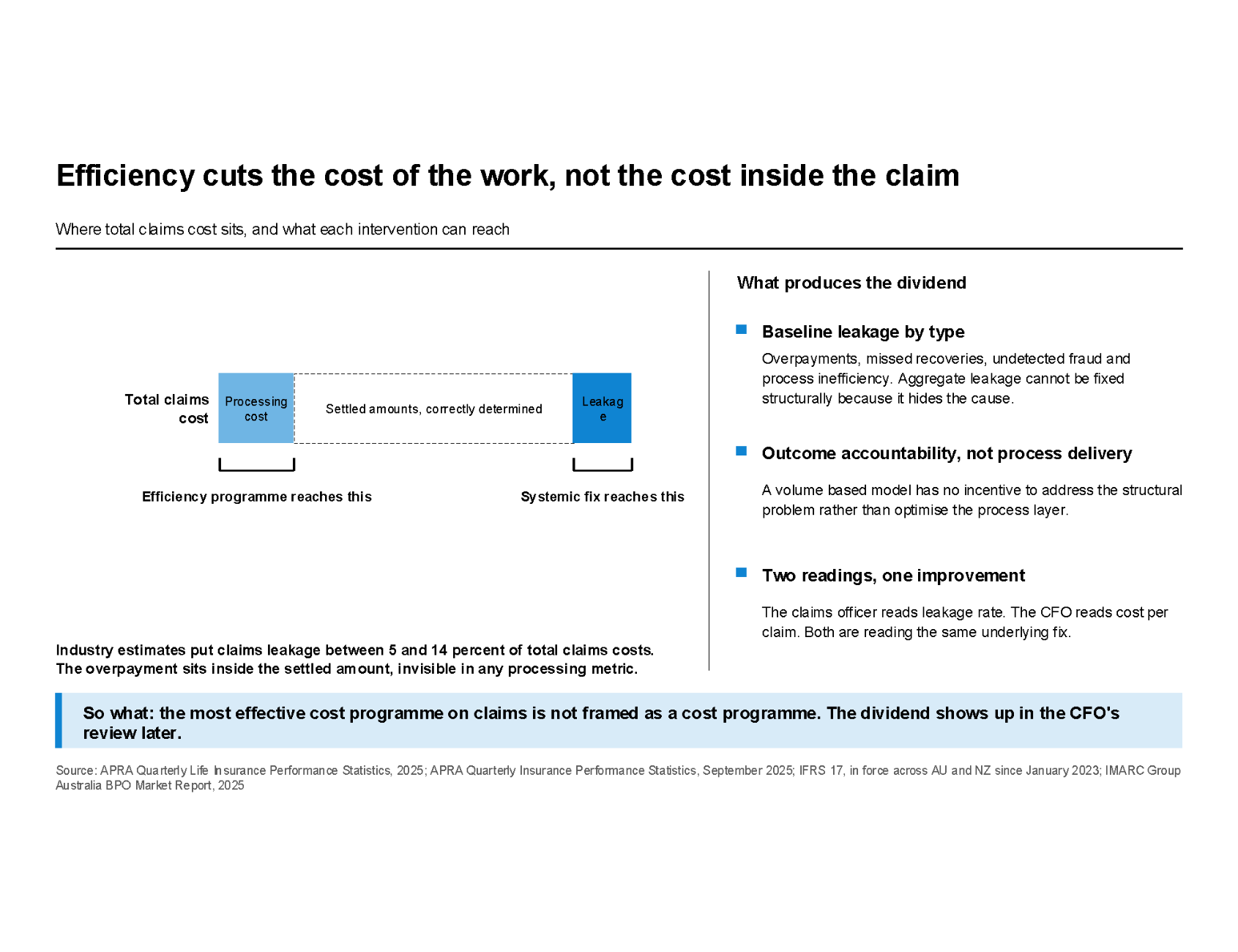


The fraud function that cannot show what it returns will always compete on cost. That is the structural trap: when the fraud budget is approved because it is required rather than because it generates a return, it will be sized to meet the minimum requirement. Not to maximise recovery.
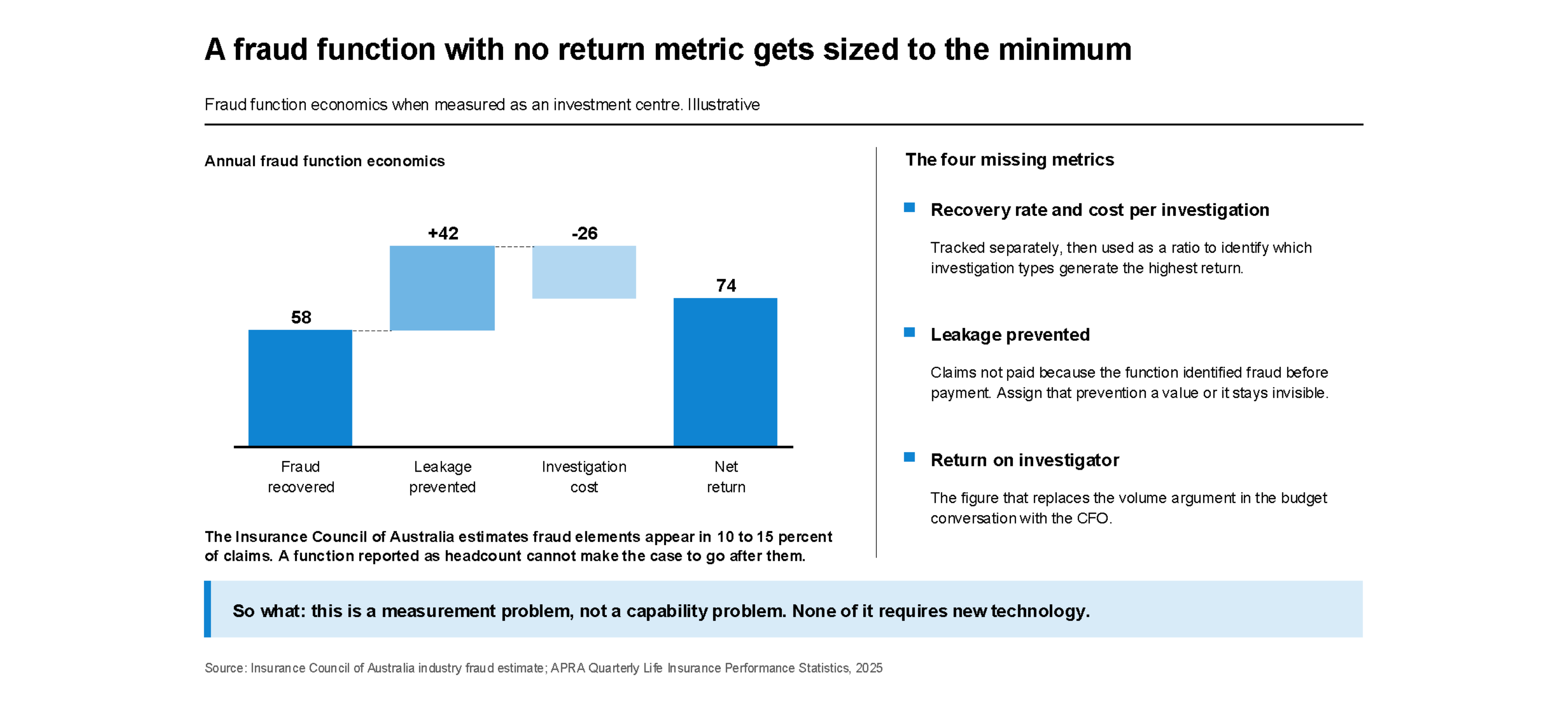
Insurance fraud is not a peripheral problem. The Insurance Council of Australia estimates that fraud elements appear in 10 to 15% of claims. Across a large book, that is a substantial number of determinations made with imperfect information - and a substantial financial exposure embedded in the claims portfolio.
The default response is to treat the fraud function as a cost of doing business. A compliance requirement that needs resourcing, produces some recovery, and is reported upward as a headcount and cost line. Nobody asks what the return is. The framing is the problem. Not the function.
A fraud function measured as a cost centre will be managed as a cost centre. The budget conversation will be about minimising spend. The team will be sized to cover volume, not to optimise return. Investment in capability - specialist investigators, analytics, better tooling - will be difficult to justify because the business case requires a return metric that nobody is tracking.
The measurement gap is specific. Carriers who do not track fraud recovery rate, cost-per-investigation, leakage prevented per case, and fraud-investment ROI cannot make the business case for expanding the function. They can show the team is busy. They cannot show the team is generating a positive return.
The carriers who do track those metrics find the function pays for itself. Investigation cost is typically a fraction of the recovery it enables. Leakage prevented in year one becomes the baseline for investment justification in year two. The business case compounds when the measurement is in place.
A fraud function that pays for itself is not aspirational. It is a measurement problem.
The reframe is specific: model the fraud function as an investment centre rather than a cost centre. Track what it spends and what it recovers. Track the claims that were not paid because the function identified fraud before payment - and assign a leakage-prevented value to that prevention. Track cost-per-investigation and recovery-per-investigation as separate metrics, and use the ratio to identify which investigation types generate the highest return.
That measurement discipline changes the budget conversation. The CFO who approved a fraud team because it was required can now see what the function returns. The Head of Fraud who has been making the volume argument can now present a return-on-investigator figure instead.
None of this requires new technology. It requires a measurement framework that most fraud functions do not currently have.
The sequence that builds a self-funding fraud function follows a recognisable pattern.
First: define the measurement set before the next budget cycle, not during it. Recovery rate, cost-per-investigation, leakage prevented, and fraud-investment ROI are the four metrics that translate fraud outcomes into financial language. If those metrics are not currently tracked, the first investment is in the measurement infrastructure.
Second: segment investigations by type and map return-on-investigation for each type. Complex fraud investigations carry higher costs. They typically carry higher recovery potential. Knowing which investigation types generate the best return allows the function to allocate specialist resource where it compounds most.
Third: report the fraud function to the CFO as an investment centre, not a headcount line. The conversation that produces resource commitment is the conversation that demonstrates return. The fraud budget that has never been challenged is the fraud budget that has never been measured correctly.
ISSI's partnership model is structured around co-owning claims and fraud outcomes - not staffing a queue. With experience on claims-intensive platforms including PetSure's GapOnly real-time claims environment, ISSI works on an outcome-based commercial model rather than a staff-augmentation arrangement. If the fraud function is currently treated as a cost line without a return metric, it is worth thirty minutes to explore what an outcome-based fraud model could demonstrate.
Sources: Insurance Council of Australia (industry fraud estimate, general reference); APRA Quarterly Life Insurance Performance Statistics (2025)